
 简体中文
 English

This professional guide is compiled by the R&D team of Huizhou C-Flink Technology Co., Ltd., a leading provider of high-speed interconnection solutions for AI computing and data center scenarios, with nearly 25 years of experience in communication cable and optical component development. An Active Optical Cable (AOC) is a core high-speed transmission component widely deployed in AI computing clusters, high-performance computing centers and cloud data centers, playing a critical role in solving high-bandwidth, low-latency interconnection pain points across racks and rooms. Many engineers, procurement specialists and industry practitioners still hold misconceptions about its working principle, classification, application scenarios and selection criteria. This guide draws on real global project delivery experience to explain the core definition, working mechanism, performance indicators, compliance requirements and common selection pitfalls of AOC products, to help readers build a systematic, professional understanding of this key interconnection technology.
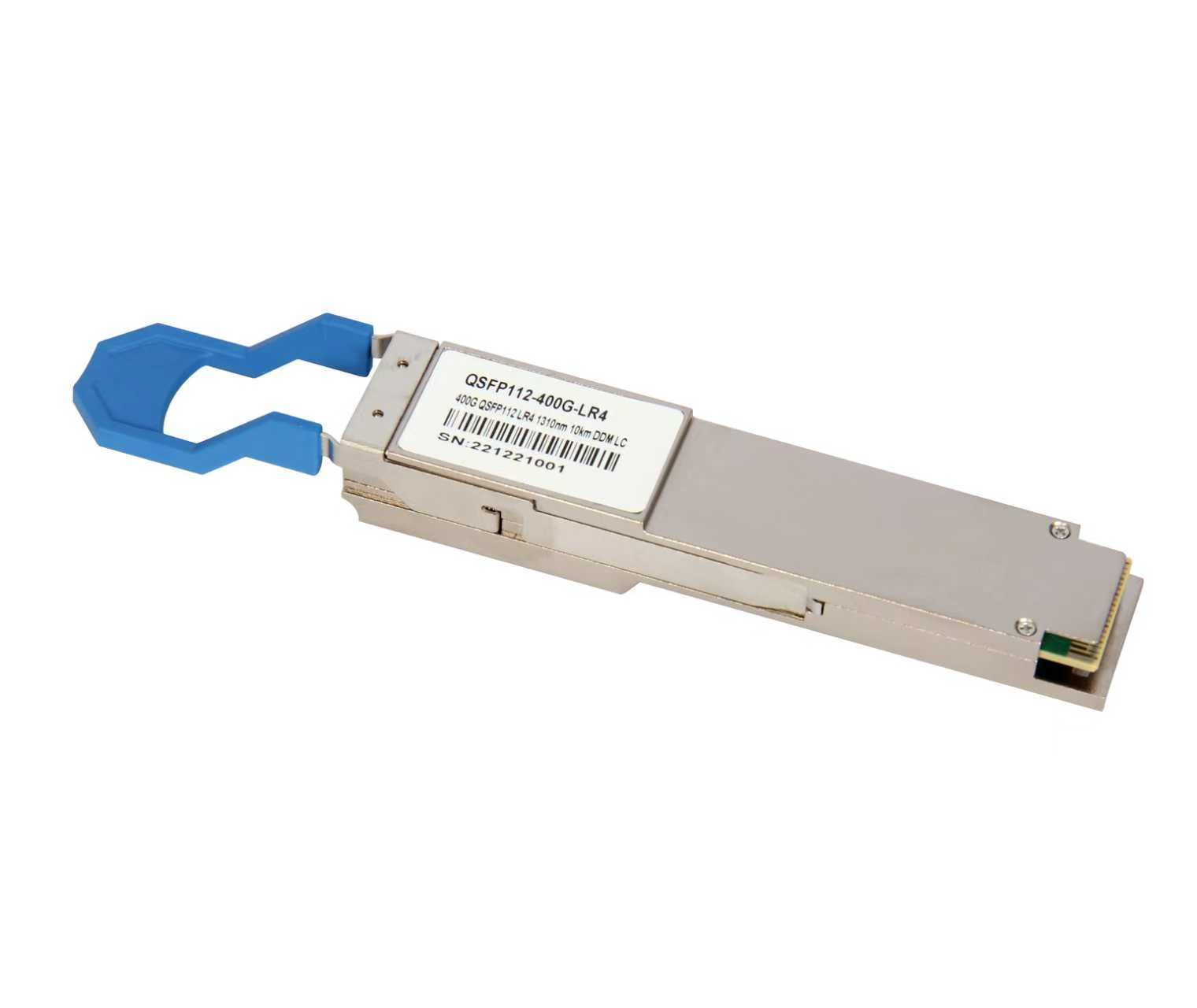
Core Definition and Industry Positioning of AOC High-Speed Cables
Per global optical communication industry standards, an AOC is an integrated active optical transmission component that embeds optical transceivers at both ends of a fiber optic cable, eliminating the need for separate optical modules during deployment. In practical terms, it is a ready-to-use high-speed link solution that converts electrical signals to optical signals for long-distance, low-interference transmission, addressing the range and electromagnetic interference limitations of traditional passive copper cables.
As a core component for high-speed data center interconnection, AOC delivers three irreplaceable advantages for modern computing infrastructure: first, it supports 100-meter level low-latency transmission, far exceeding the 5-meter maximum range of passive copper cables; second, it is inherently immune to electromagnetic interference, making it suitable for high-density server deployment environments; third, its slim, lightweight cable design reduces cabinet space usage and improves overall cooling efficiency.
Technical Metric | AOC High-Speed Cable | Passive DAC Copper Cable | Standalone Fiber Patch Cord |
|---|---|---|---|
Maximum Transmission Distance | 100 meters | 5 meters | Requires separate optical modules |
Electromagnetic Interference Resistance | Full immunity | Moderate shielding required | Full immunity |
Deployment Complexity | Plug and play, integrated design | Plug and play, heavy cable weight | Requires separate module configuration |
Space Efficiency | Slim, lightweight form factor | Thick, rigid copper cabling | Requires additional module mounting space |
Core Working Mechanism of AOC High-Speed Cables
In simple terms, an AOC transmits high-speed data by converting electrical signals to light signals at the transmitting end, sending the light through fiber optic cores, and converting the light signals back to electrical signals at the receiving end. The full transmission process follows four core steps: first, the transmitting end receives electrical signals from a connected server or switch port; second, the integrated optical transceiver converts electrical signals to modulated light signals matched to the transmission rate; third, light signals travel through low-loss fiber cores across the required transmission distance; fourth, the receiving end optical transceiver converts light signals back to standard electrical signals for output to the connected device port.
Key Performance Indicators for AOC Selection
When selecting AOC products for data center deployment, buyers should focus on four core performance metrics to match project requirements, as outlined below:
Performance Metric | Standard Definition | Industry Reference Range | Selection Guidance |
|---|---|---|---|
Supported Transmission Rate | Maximum data throughput per link | 10G to 1.6T | Match rate to current and future network upgrade plans to avoid premature replacement |
Operating Temperature Range | Ambient temperature range for stable operation | 0℃ to 70℃ | Select extended temperature range models for high-heat data center environments |
Device Compatibility | Supported server and switch brands | All mainstream global brands | Request compatibility test reports for specific device models before bulk purchase |
Quality Control Standard | Manufacturing and testing process requirements | 100% full inspection before shipment | Select suppliers that conduct signal integrity, aging and packet loss testing for every unit |
Typical Industry Application Scenarios
AOC high-speed cables are widely deployed across three core high-growth scenarios, supported by real delivery experience including projects for national supercomputing centers, commercial data centers and cloud service providers. First, AI computing cluster interconnection: AOC links connect GPU servers across adjacent racks to support high-bandwidth model training traffic, with slim cabling reducing cabinet congestion. Second, high-performance computing center deployment: AOC supports cross-room interconnection for supercomputing platforms, leveraging its long transmission range and low latency. Third, cloud data center expansion: AOC provides a cost-effective upgrade path for existing data centers, without requiring major cabling infrastructure overhauls.
Global Compliance Requirements for Export-Grade AOC Products
To meet global market access requirements, export-grade AOC products must hold recognized international certifications. These include CE certification for EU market access, FCC certification for the United States market, TÜV certification for German and European safety standards, RoHS compliance for restricted substance requirements, and ICES certification for the Canadian market. Reputable manufacturers maintain ISO9001 quality management and ISO14001 environmental management system certifications to ensure consistent production quality across all product batches.
Common Industry Misconceptions About AOC Cables
Three common misconceptions often lead to suboptimal purchasing decisions for AOC products. First, the belief that AOC is always more expensive than copper DAC: in reality, for transmission distances over 5 meters, AOC delivers lower total cost than separate optical module and fiber combinations, with no additional configuration required. Second, the belief that AOC has limited device compatibility: modern AOC products are designed to work with all mainstream server and switch brands, with available compatibility testing for niche device models. Third, the belief that AOC requires complex setup: AOC is fully plug-and-play, with no additional driver or configuration required for standard deployment.
FAQ
Q: What is the typical maximum transmission distance of a standard AOC high-speed cable?
A: Standard AOC products support 100-meter level low-latency transmission, which is 20 times the maximum range of passive copper DAC cables for equivalent bandwidth.
Q: Does AOC require separate optical modules to operate with mainstream switches?
A: No, AOC is an integrated component with embedded optical transceivers at both ends, requiring no separate module purchases or configuration for plug-and-play deployment.
Q: What certifications are required for AOC products exported to European and North American markets?
A: Export-grade AOC products typically hold CE, FCC, TÜV, RoHS and ICES certifications to meet mandatory market access requirements for EU, US and Canadian markets.
Contact Us
Official Website: https://www.c-flink.com/
Email: [email protected]
Global Service Hotline: +86-18617355209
WhatsApp: +86180264909502
Factory Address: 6th Floor, Building DE, Jimi Industrial Park, No.101 Jinfu Road, Xiaojinkou Subdistrict, Huicheng District, Huizhou City, Guangdong Province, China.
